Metal Braces Cost vs Ceramic and Lingual Braces
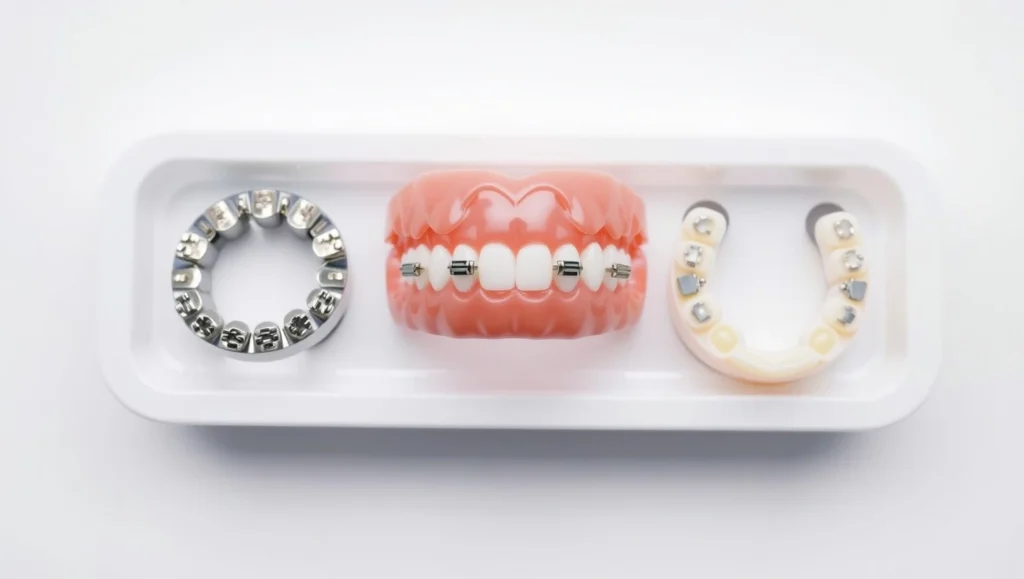
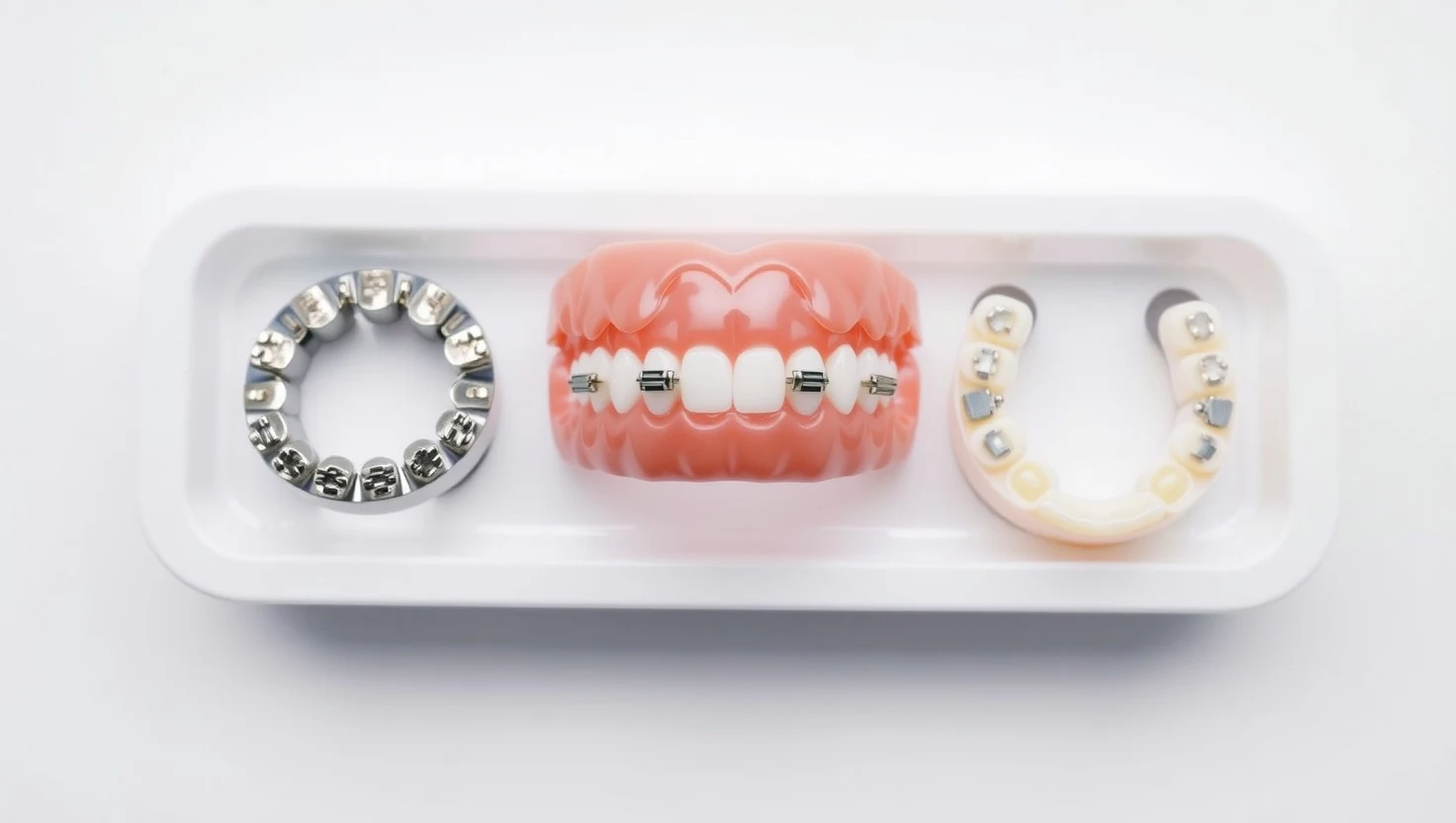
Metal braces cost the least to start, but the type you pick changes the price a lot. Metal braces average $6,343, ceramic braces average $5,834, and lingual braces average $9,221, with wide ranges around each. The cheapest sticker is not always the cheapest treatment, and this guide shows why. Here is the full price ladder.
Brace type | Price range | National average |
|---|---|---|
Metal braces | $2,500 to $10,000 | $6,343 |
Ceramic braces | $4,480 to $11,312 | $5,834 |
Lingual braces | $7,321 to $17,411 | $9,221 |
Clear aligners (for context) | $1,800 to $8,100 | $5,108 |
Read the ladder honestly, because it holds a twist. Metal braces have the lowest starting price at $2,500 and the widest range. Ceramic braces show a lower average than metal, even though ceramic starts higher, because an average and a range measure different things.
The average reflects the mix of real cases, while the range shows the floor and the ceiling. The clear aligner low end of $1,800 covers limited and direct to consumer cases, not a full treatment plan, so it is shown here only for context.
Source: Synchrony CareCredit Average Procedural Cost Study, ASQ360° research, 2023 to 2024, published at carecredit.com. Prices last checked: October 2026.
Want a number for the type you are leaning toward? Enter your state, your brace type, and how complex your case is, and see the cost range for you.
Metal Braces Cost and What Drives It
Metal braces cost a national average of $6,343, with a range of $2,500 to $10,000. They have the lowest starting price of any fixed type, which is why they are the most common route into treatment. The price climbs with case complexity and a longer treatment.
Metal braces cost:
Price range | National average |
|---|---|
$2,500 to $10,000 | $6,343 |
What drives the price. Metal braces use stainless steel brackets and standard wires, which are the least costly materials. The fee covers the brackets, the regular adjustment visits, and the standard lab work. Because the parts are simple and sturdy, there is less to go wrong and repair.
Who pays more, and when. A simple case on a short timeline sits near the low end. A complex bite, or a case that runs 24 months or longer, moves toward the high end because it needs more visits and more materials. The type is the same, but the work is not.
A note on self-ligating braces. Self-ligating brackets, including Damon type systems, use a built in clip instead of elastic ties. Clinics price them in about the same band as traditional metal, around $4,000 to $8,000, according to the secondary compilation Real Dental Costs. They are a variation on metal braces, not a separate price tier.
Ceramic Braces Cost and What Drives It
Ceramic braces cost a national average of $5,834, with a range of $4,480 to $11,312. They work like metal braces but use tooth colored brackets that blend in. The extra money mostly buys lower visibility. The price rises with longer treatment and with the extra care the brackets need.

Ceramic braces cost:
Price range | National average |
|---|---|
$4,480 to $11,312 | $5,834 |
What drives the price. Ceramic brackets are made from tooth colored material that costs more to produce than steel. That material is what you are paying extra for, because it makes the braces far less noticeable. The function is the same as metal, so the difference is looks, not results.
Who pays more, and when. Adults and older teens who want a discreet look are the usual buyers. Ceramic brackets are more fragile than metal, so a chipped bracket can mean an extra repair visit, which adds to the running cost. A longer or more complex case also pushes the price up, as with any type.
Lingual Braces Cost and What Drives It
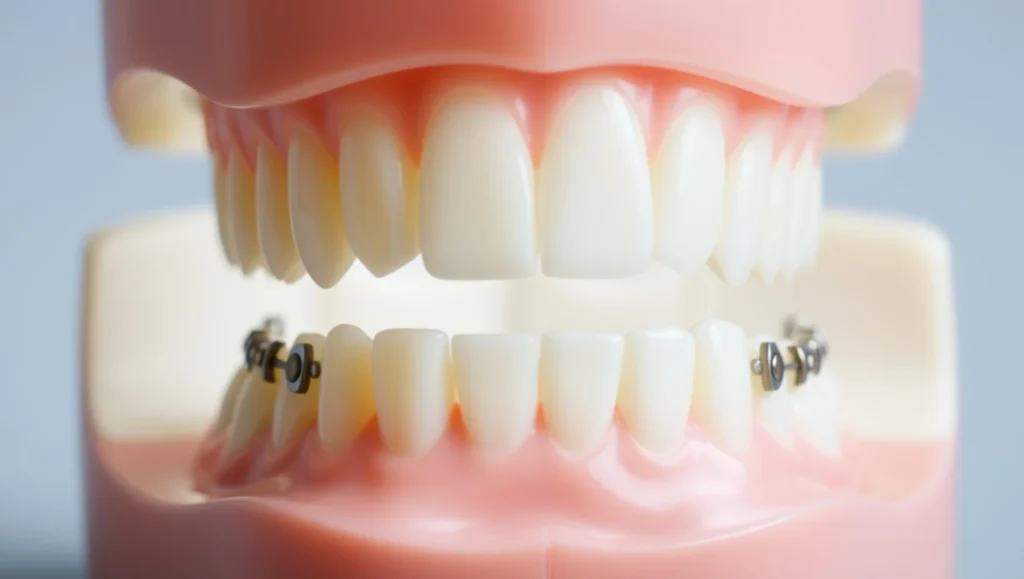
Lingual braces cost a national average of $9,221, with a range of $7,321 to $17,411. They are the most expensive type on both average and range. They fix to the back of the teeth, so they are hidden from the front. The cost comes from custom lab work and longer appointments.
Lingual braces cost:
Price range | National average |
|---|---|
$7,321 to $17,411 | $9,221 |
What drives the price. Each lingual bracket is custom made to fit the back of a single tooth, which means more lab work than any other type. The appointments take longer because the orthodontist works from behind the teeth. Fewer providers offer lingual braces, since it takes extra training, and that scarcity supports the price.
Who pays more, and when. The buyer is usually someone who needs the braces fully hidden, such as a performer or a client facing professional. There is no cheaper version of lingual braces that keeps the hidden placement. A complex case raises the cost further, as the custom work grows.
The Real Cost of Owning Braces
The brace fee is not always the whole bill. Retainers, adjustment visits, and the odd repair can be billed on top. Many quotes bundle these in, but not all do. Below are the common extras, then an honest answer on which type is truly the cheapest.
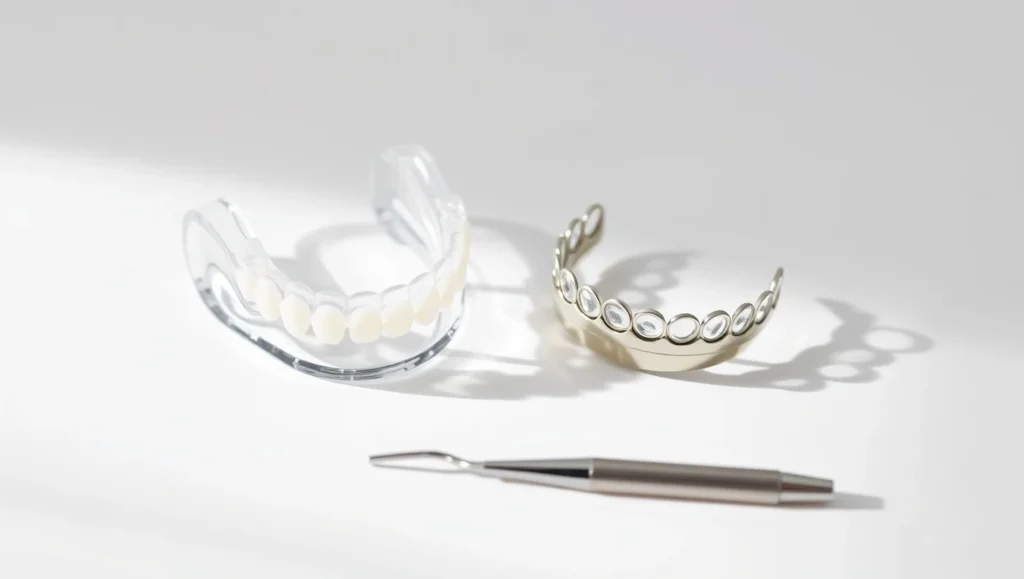
Extras that can be billed on top:
Extra item | Typical cost |
|---|---|
Retainer, clear plastic (Essix), per arch | $181 |
Retainer, molded acrylic (Hawley), per arch | $302 |
Retainer, bonded fixed, per arch | $344 |
Adjustment visit, if billed separately | $115 |
Broken bracket repair | $185 |
Ask if the quote is all inclusive. Many comprehensive quotes bundle the records, the adjustment visits, and the first retainers into one fee. Others bill some of these separately. The AAO advises asking whether a quote is all inclusive, so you compare like with like. Records are sometimes billed separately too, so ask for that amount in writing.
So which type is actually cheapest? On starting price and on repair exposure, traditional metal is the cheapest route into treatment for most cases. Its brackets are sturdy, so there are fewer repair visits than with fragile ceramic. On published averages alone, though, ceramic prints lower than metal.
Both facts are true, and they do not contradict. The average reflects the mix of cases each type tends to treat, while the starting price and repair risk reflect what most people actually face. We do not crown a single winner, because the honest answer depends on your case.
How Insurance Treats Each Type
Insurance usually does not pay more just because you pick a pricier type. Plans that include orthodontics commonly pay 50 percent, capped by a lifetime maximum of $1,000 to $3,000. That benefit is set against the metal braces fee, so choosing ceramic or lingual means paying the difference yourself.
Here is how it plays out. The plan pays its share up to the cap, based on the standard metal braces level. If you upgrade to ceramic or lingual, you receive that same benefit and cover the upgrade difference between the types out of pocket. Source: FAIR Health for the typical 50 percent share and the $1,000 to $3,000 lifetime cap.
So the type you choose changes your out of pocket cost more than it changes the plan’s payment. For how coverage, caps and payment plans work in full, see coverage and payment plans by brace type and whether insurance pays more for one type.
Which Types Can Treat Your Case
Not every type can treat every case. Lingual braces and clear aligners have clinical limits, so the cheapest type on the ladder may not be one that can do your treatment. A price you cannot use is not a saving. The cheapest suitable option is not always the cheapest option.
This matters when you shop on price alone. If a lower cost type cannot handle your bite, its price is not really on the table for you. The right comparison is between the types that can actually treat your case, not across the whole ladder.
This page talks about cost, not clinical fit, and makes no medical recommendation. Which types suit your teeth is a question for your orthodontist. Bring the price ladder to the consultation, and let the exam narrow it to the types that will work, then compare those on cost.
The Same Type Costs Different Amounts by State
Type is not the only price driver. The same metal braces cost more in one state than another, because local overhead differs. If you want a number closer to home, start with your state, then compare types inside it.
See prices for your state: metal braces cost in California, metal braces cost in Texas, metal braces cost in Florida, see ceramic braces prices in New York, and see ceramic braces prices in New Jersey.
Frequently Asked Questions
Ready to put a number on it? Enter your state, your brace type, and how complex your case is, and compare the options for you.
The figures here are estimates built from published averages. They are a guide, not a quote. Your real price comes from a consultation with an orthodontist who can see your teeth. This page compares cost only and is not dental or financial advice.
For the national picture, see the full guide to how much braces cost and national braces costs explained.